Surreal – Salvador Dali: Astrology Musings

women s purple and yellow lips with yellow liquid
Photo by Oleg Magni on Pexels.com

Salvador Dali, as we all know, was completely original; a surrealist extraordinaire, eccentric, highly imaginative and also a writer.

So let’s take a look at his birth chart. Cancer rising with Neptune in the house 1 in the whole signs housing system. His ruler, the Moon, is conjunct the midheaven in Aries, square to his house 1 Neptune and also loosely square Uranus on the house 6/7 cusp.

Sensitivity

Here is the high impressionability and sensitivity brought by another prominent Neptune, so often the case in charts of artists of all kinds.

This time Neptune is in challenging aspect, causing such creative tension which can be used outwardly in his career.

Eccentricity

Uranus involved also, will add the original, eccentric, even difficult streak for which he is famous. And the Moon’s close conjunction with the MC is an indication that much of his career was led publicly too.

Like other prominent artists, such as Picasso, there is a strong showing of Taurus, which should be no surprise. Here we have the Sun, Mercury, Mars conjunct in house 11, along with Venus. Taurus is ruled by Venus and is earthy, sensual, practical, very appreciative of beauty and form.

Sensual mentality

His Mercury conjunct Mars in Taurus sharpens and sensualises the mind, and with Mercury also retrograde, this will add a touch of the off beat to his mentality. And it is interesting to note that he was a creative writer too.

Also very important to creatives is the fifth house, which is also ruled by Mars here, bringing all that earthy, sensual energy to bear in this area of his life.

His Sun tightly square Saturn from house 8 (house of death traditionally), may symbolise the difficult circumstances of his early life. He was named after a younger sibling who died aged one. Dali was even given his deceased brother clothes to wear, which may have led later to him believing that he was his sibling’s reincarnation.

And equally interesting in this regard, is his Saturn in house 8 is trine Pluto in house 12, which may be descriptive of a karmic link.

copyright Leofwine Tanner 2019
Rock Review: Yes, ‘Close to the Edge’ – Close to being perfect.

IMG_1685
The Classic 1972 Progressive Rock Album.

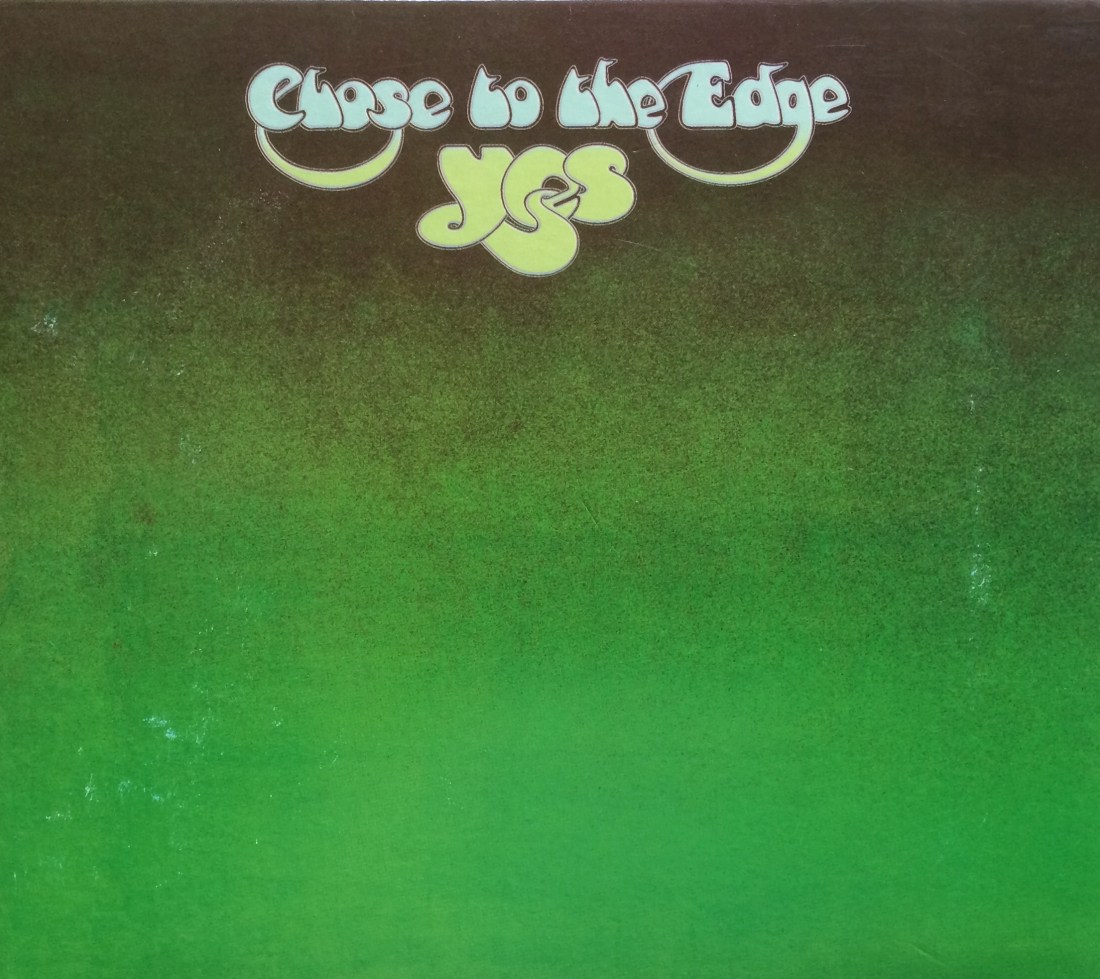
Probably my favourite all time prog rock album, ‘Close to the Edge’ (Elektra/Rhino CD) by Yes.

I was quite young when this came out in 1972 and didn’t actually hear it until later in the following year, when my elder brother brought it home. I think I had heard ‘Fragile’ by then too, the band’s 1971 release, which kicked off with ‘Roundabout’, one of Yes’ more ‘accessible’ numbers for a young boy. Nevertheless, I remember being pretty impressed by the whole album.

Spiritual sound

However, when my brother put ‘Close to the Edge’ on our family hi-fi, at first I wasn’t sure what to make of it. The slow start of planetary, naturalistic sound, the incredible weaving together of all the different movements of side one, took some time for me to appreciate, but now it’s like one epic poem, a vast spiritual movement of sound that is hard to describe, in words. It just has to be experienced, let it take you somewhere.

I still particularly like the ‘I Get Up I Get Down’ section, so beautiful, bringing together all the singing talents of the band, not just Jon Anderson, but also Steve Howe and Chris Squire.

Five virtuosos

Which leads me to a major point. Has there ever been a better example of five incredible talents working together, at the top of their game, producing such a masterpiece? I would doubt it.

Jon Anderson’s unique voice and inspirational lyricism; Bill Bruford’s peerless percussion; Steve Howe’s sheer virtuosity on six and twelve strings; Chris Squire’s uniquely lyrical bass and underrated singing; Rick Wakeman’s pure genius and dexterous flair.

It would prove to be a small window, sadly. Very soon, Bill Bruford would be on his way, followed soon after by Rick Wakeman. But what a beautiful, ornately made window it was. It was of its time.

Woven together

Side Two for me is equally impressive. I can still quite easily listen to ‘And You And I’ on repeat. I love the start, with Steve Howe hitting the harmonics on his twelve string, the way Rick’s synth plays over the top is so joyful, full of life. And like all Yes tracks, it’s difficult to envisage how they all put this together, so differing are the elements, but they come to together beautifully, woven by lyrics which are both hard to fathom, yet totally fitting – a Yes trademark.

And the final track, ‘Siberian Khatru’. Heaven knows what it’s about but if I had just one track to take to my desert island, I think it would be this.

Atmospheric

Great, catchy guitar riffs to start off and great rock playing by the whole band, but soon the wonderful group singing harmonies come in to play, adding a great atmospheric and naturalistic feel.

Then all the virtuosity of the band kicks in – indescribable. Especially, towards the end when they sing pairs of mysterious words with lots of reverb, which may, or may not, be related… but it works, it means something, though I don’t know what it is. And did I mention Steve Howe’s jazzy guitar on the outro?

Just how it should be, long reign the mystery.

copyright Leofwine Tanner 2019

The Proms: An Extraordinary British Tradition

united kingdom flag tied to a wooden bench
Photo by Artem Beliaikin on Pexels.com

The Proms begin today, July 19, perhaps the quintessential British cultural event, held each year in several venues in London between July and September, though most notably at The Royal Albert Hall.

The word proms is in fact a shortening of the term Promenade Concerts, a cultural phenomena which had its origins in 18th century London, which took place in pleasure gardens where the spectators were allowed to move around the orchestras. The word promenade is a borrowing from the French language, meaning to walk.

Music for the masses

In the 19th century this style of concert moved indoors as well, leading eventually to the establishment of ‘The Proms’ on August 10 1895 at the Queens Hall, Langham Place by the well known impresario, Robert Newman.

The idea was to offer the experience of classical music to the general public, with lower ticket prices in an informal setting. It has to be said that the idea worked, with a comprehensive schedule of performances spanning over two months.

Too English?

However, the Proms do have their detractors. For instance, I have heard it said more than once that they are too English. Whilst there is certainly a great deal of flag waving, a cursory look at the famous ‘Last Night of the Proms’, will reveal flags from all over the world.

What is more, much time and energy has been put in to diversifying the content, with the inclusion of world music, as well as folk music from all over Great Britain and Ireland.

copyright Leofwine Tanner 2019


Portrait of An Artist, James Joyce – Astrology Musings

close up of hand holding pencil over white background
Photo by Lum3n.com on Pexels.com

James Joyce is the Irish colossus of English literature.

Novelist, short story writer, poet, teacher, critic, linguist, singer… he was a man of many parts.

Brought up in a traditionally Catholic household, he rejected much of what that tradition stood for, becoming a leading member of the writing Avant-Garde, yet he never left the old Catholic world completely.

Widely travelled

He spent most of later years abroad, travelling to Italy, France and finally dying Switzerland; he may have left his native Dublin but it continued to dominate his thoughts, strongly influence his writing.

According to the birth data, he had Capricorn rising, an indication of a hard working approach to life. His ruler, Saturn, is in Taurus in house 5 of creativity, which is ruled by and making a difficult square to Venus in Aquarius in house 2 of personal security. He clearly put a lot of effort in to his creative art but it was always, especially early on, a financial struggle.

The Aquarian paradox

James Joyce was a Sun Aquarian, natives who typically have a certain rebellious or unusual streak about them, though who also, paradoxically, often adhere to certain aspects of conservatism all their life.

This may be due to the attribution of the traditional ruling planet of Aquarius, Saturn, in his more positive aspect. Uranus too has become associated with the fixed air sign.

Joyce had Venus conjunct his Sun in house 2. Here is his attraction to the artistic process and beauty in an Aquarian forward thinking manner.

Neptune inspires

His Sun is also closely square Neptune in Taurus, along with Jupiter in house 5. Joyce had a very fine tenor voice, and Neptune’s strong link to the Sun from Taurus, a sign which rules the throat, may be indicative of this, plus his abilities at creative writing and poetry.

His Mercury just into Pisces in house 3 hints at a fine imagination, especially as the ruler of house 3, Jupiter, is in conjunction with Neptune and trine Uranus from house 9.

Here is the extraordinary writing potential, which is at once imaginative, inspirational but also off beat.

Works like ‘Portrait’, ‘Ulysses’ and ‘Finnegan’s Wake’ are testimony to this. Mercury is also the ruler of house 9 of the higher mind, where Uranus is found. He was something of a linguist too.

However, this Mercury is also trine Mars in Gemini. Here is the sharp intellect too, which gave him the ability to be a fine critic.

copyright Leofwine Tanner 2019

Berthe Morisot, the Art of Astrology – Musings

art-artist-canvas-374054
Photo by Burst, pexels.com

Often considered one of the three great ladies of impressionism, Berthe Morisot’s works were described as exuding much feminine charm.

Born to a wealthy family, her early style was said to be ‘effleurer’, or of a light touch, though her palette was usually quite restrained in the use of colour.

She had three major periods in her work, watercolour, pastel, and then oil painting, though at times she was not averse to mixing all three mediums together. Even during her lifetime she was considered one of the best impressionists and still has a high reputation today.

Responsive love of balance

What can we see from her chart?

She has Cancer rising, making the Moon her ruler, which is in Libra conjunct Mars in house 4.

She seems to have had very strong feelings, and could probably argue well. The Moon in Libra loves balance and harmony and this is invigorated by the Martian energy. She was clearly very responsive. Mars is also the ruler of house 10 of career and house 5 of creativity, all indicative of an energetic and creative career.

A spur to achievement

Her Capricorn Sun in house 7 along with Mercury, gives her the ability to graft and study seriously, but clearly her marriage to Manet’s brother Eugene was extremely important, as was her relationships to other artists of that period, from whom she gained much inspiration.

However, the Sun’s challenging square to her Moon and Mars, shows that there were some major difficulties in her relationships at home, possibly in her childhood, which could have felt like a cleavage, but a spur to achievement in the long run.

A sea of artistic inspiration

It’s like her own strong feelings being at loggerheads with her sense of duty as a person as she grew.

Most interesting of all to my mind is Venus conjunct the MC in Pisces in house 9. If Venus can represent an aspect of art, then Pisces is like a sea of inspiration, very close to one of the prime indicators of career, or life direction.

This, perhaps, more than any other point in her chart, describes her very soft, subtle signature style of ‘effleurer’ and the ‘feminine charm’ she was known to illustrate in her work.

copyright Leofwine Tanner 2019