I had to share this story, a sad testament of our times, see link below.
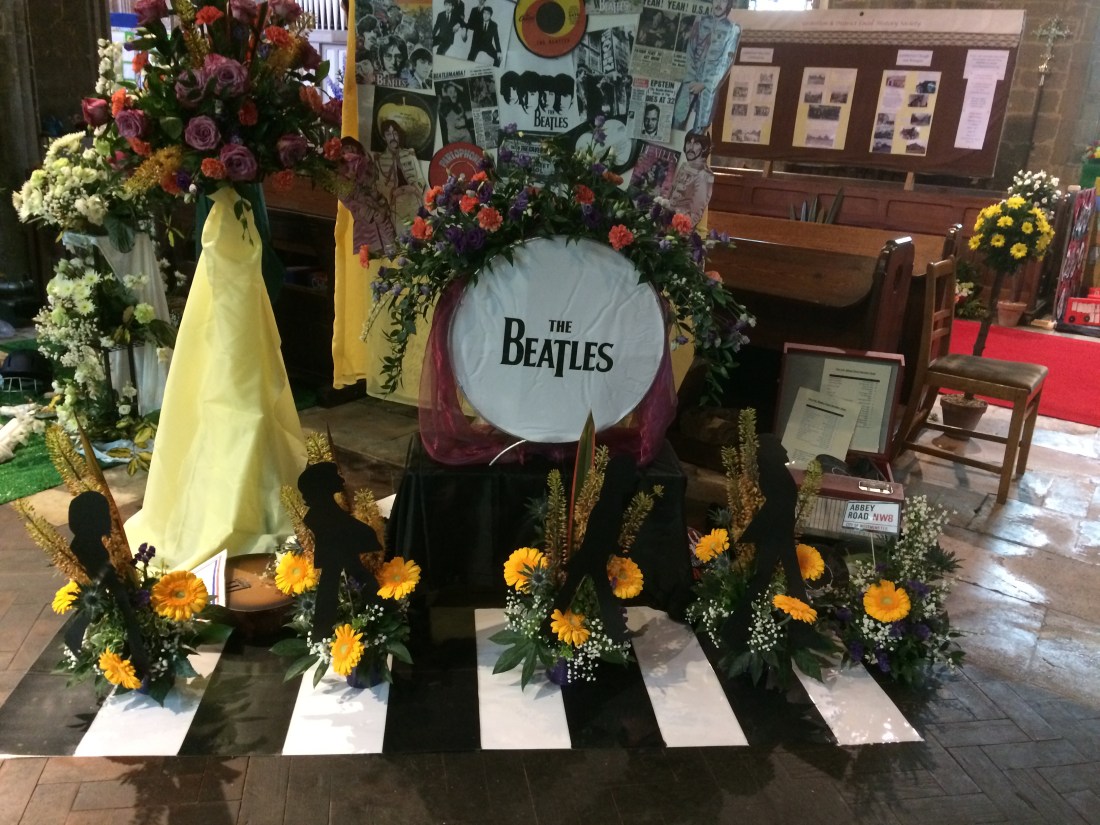
We only visited this lovely church two weeks ago for the annual flower festival. There was a beautiful floral tribute to the Beatles, based on their ‘Abbey Road’ album (see above).
Sad to think that despite local people taking so much time and care to look after these wondrous buildings, that something like this can happen overnight. And it’s by no means an isolated case.
Cherry Willingham Church of St. Peter and St. Paul.
One of the most fascinating churches we visited during the West Lindsey Churches Festival this May, was at Cherry Willingham, dedicated to Saints Peter and Paul, a Grade 1 listed Georgian building.
Sitting at the highest point of the village, there are steep steps to the entrance. Suddenly you are confronted by a terrific example of Georgian architecture. From the west door entrance, you can see right through to a wonderful reredos resplendent behind the altar.
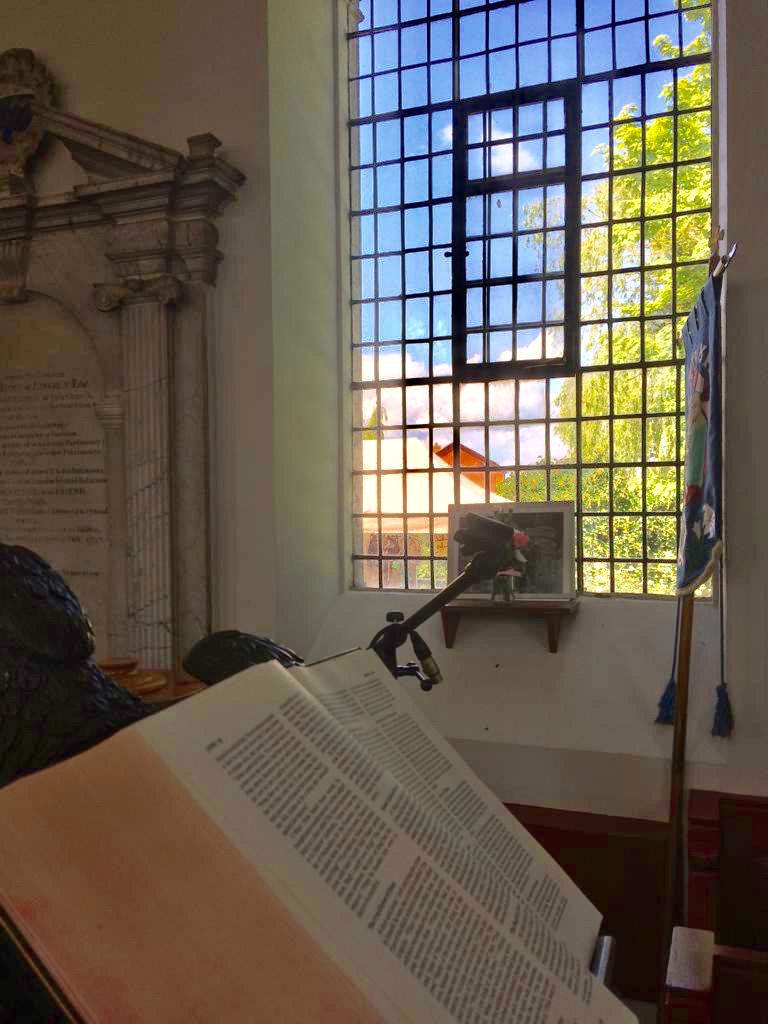
The quality of light was wonderful.
Once more we were greeted by very pleasant local people, who filled us in with all the salient historical and current facts.
Home made cakes and refreshments were on offer and there was a display of the charities the church supports.
Inside it was simply stunning.
Although quite small, what the building lacks in size it more than makes up for in style and detail.
It opened in 1753, its founder a certain Thomas Becke, who had bought an estate in the village. Inside there is a large marble monument to Mr Becke. The church is built with local Ancaster limestone, infused with fossils.
Most pleasing about the design of this small church is the quality of the light afforded by the style of windows (although our photographs possibly don’t quite do that justice), aided certainly by it being a sunny spring day, yet these large windows would surely afford good natural lighting on any cloudy day.
The reredos.
The volunteers told us that at present there is no toilet in the church – though that particular facility is arriving very soon. In the meanwhile, the very kind and courteous vicar took us to her nearby house so that we could perform that particular function!
This typifies the whole spirit we felt within the church, that of community and care. Thank you Cherry Willingham.
Today in 1610, King Henry the Fourth of France was assassinated.
Henri, although baptised as a Catholic, was brought up as a Protestant. Due to the inflammatory religious situation in France and his background, he was at times considered an enemy by both Catholics and Protestants alike. As a result, there were many previous assassination attempts.
Despite often being unpopular during his reign, he was nevertheless considered a successful king, in economic, cultural, military and diplomatic terms, but only achieved his current status as a great king posthumously, when a virtual cult arose in his memory.
He was assassinated on May 14 1610 by a fanatic called Ravaillac in the Rue de la Ferronnerie, Paris.




 Ciscography